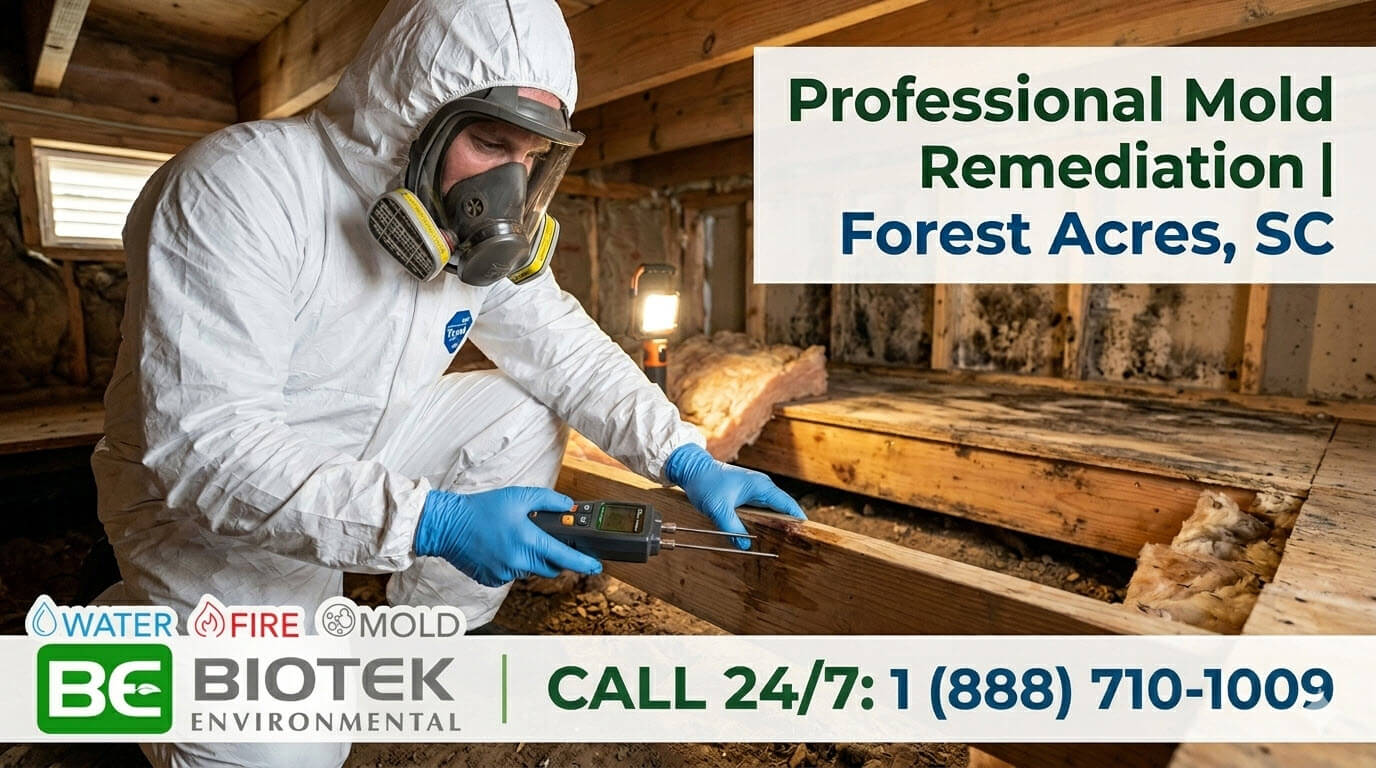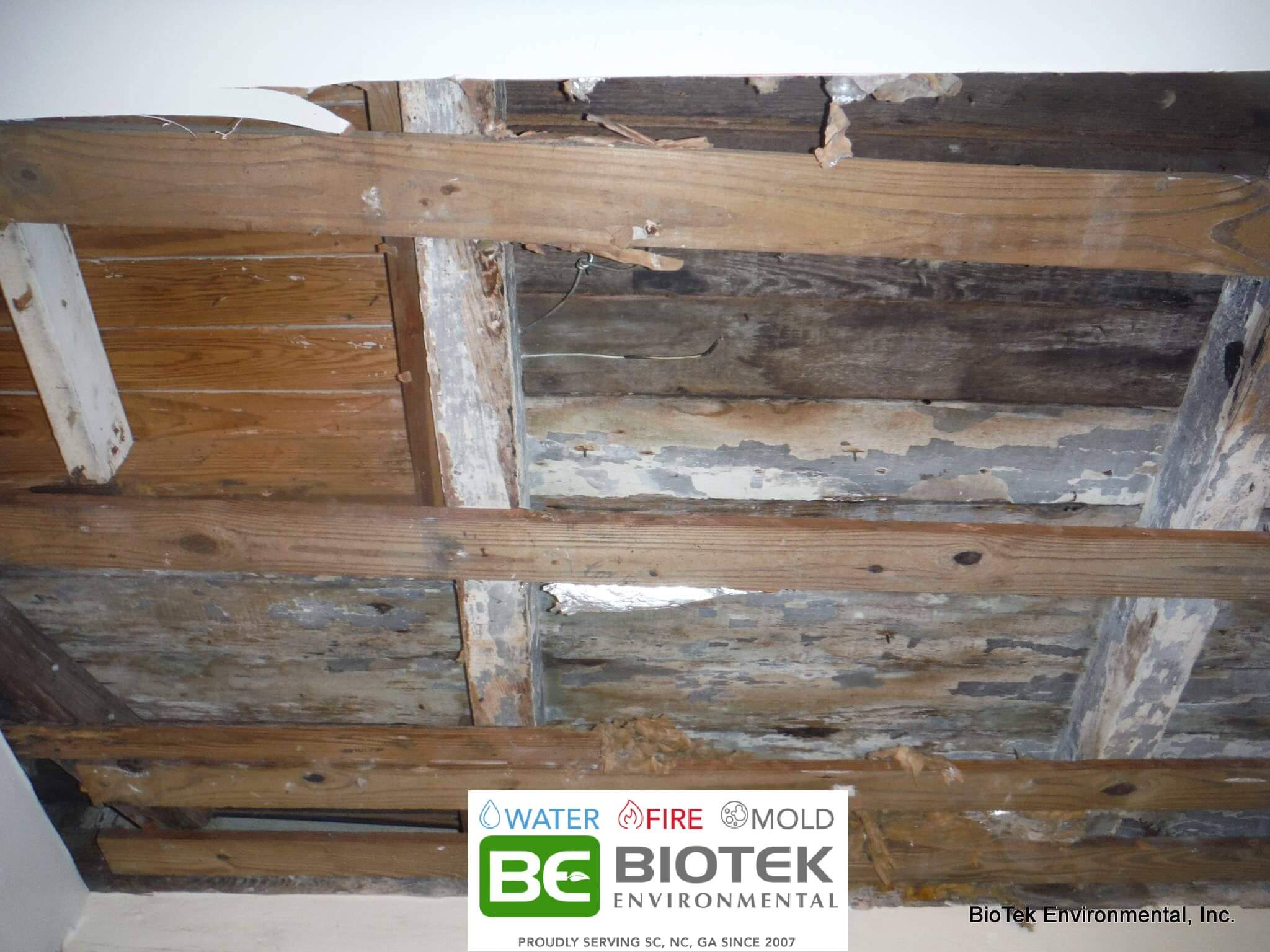
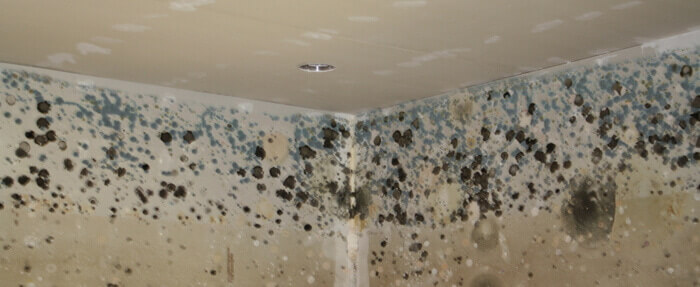
Black mold or toxic black mold is also known as Stachybotrys chartarum. It is considered one of the most dangerous molds to have in your home or workplace because it produces toxins called mycotoxins. It is likely to appear or at least be detected by you on the walls, ceilings, and floors. This type of mold can be identified by its dark green or black color and its slimy or powdery texture (avoid touching it with bare hands). However, since there are other mold species that resemble black mold in appearance, it should be identified as the Stachybotrys chartarum by experts using specialized instruments. Black mold also has a mildew or musty smell, so if you notice these smells but don’t see mold, it could be hidden inside a wall or behind spaces covered by refrigerators, bookshelves and other large pieces of furniture.
Where does It Grow?
As most of you may know, mold usually grows in warm, humid and damp areas such as your basements, bathrooms and kitchens. Although in winter, when we have the tendency to keep doors and windows closed, the warm moist air in our homes could result in mold growth just about anywhere including your bedroom. What’s more, it doesn’t only grow on walls and ceilings, it can also grow on surfaces such as fabric, paper and wood, making it difficult to remove with normal household cleaning products.
How Can Black Mold Affect Your Health?
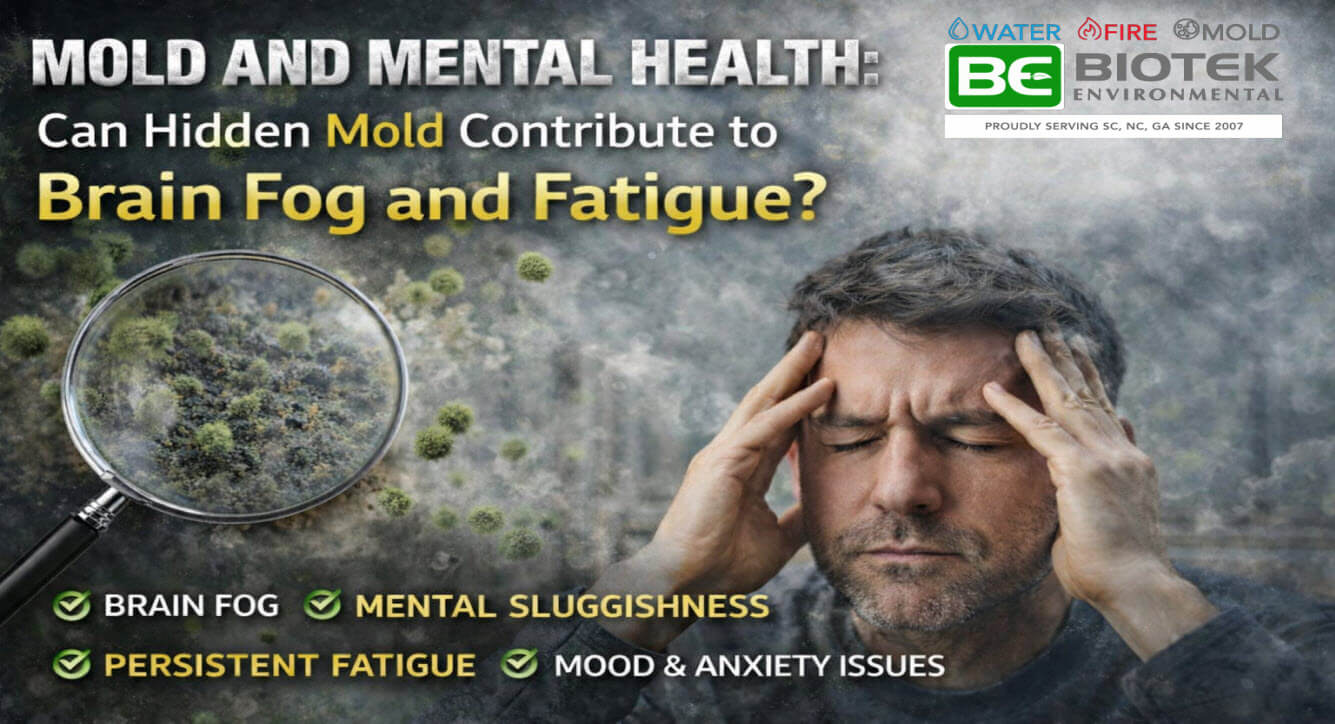
Black mold, but also all molds in general, can have serious effects on our health due to the contamination of air quality and the increased risk of respiratory conditions and other issues. Fortunately, the health issues are not, in most part, permanent and will most likely subside once the mold infestation is removed. There are cases, however, where individuals experienced long-term or permanent health issues due to extended exposure to black mold. Consequently, it is vital that you act quickly to remediate mold in order to avoid any health issues that can potentially damage your health.
Potential Health Issues Related to Black Mold Exposure:
- Breathing issues such as shortness of breath
- Allergic reactions
- Chronic Tiredness
- Skin, eye, throat, lung and mucous membrane irritation
- Triggering asthma symptoms
- Nausea
- Internal organ damage
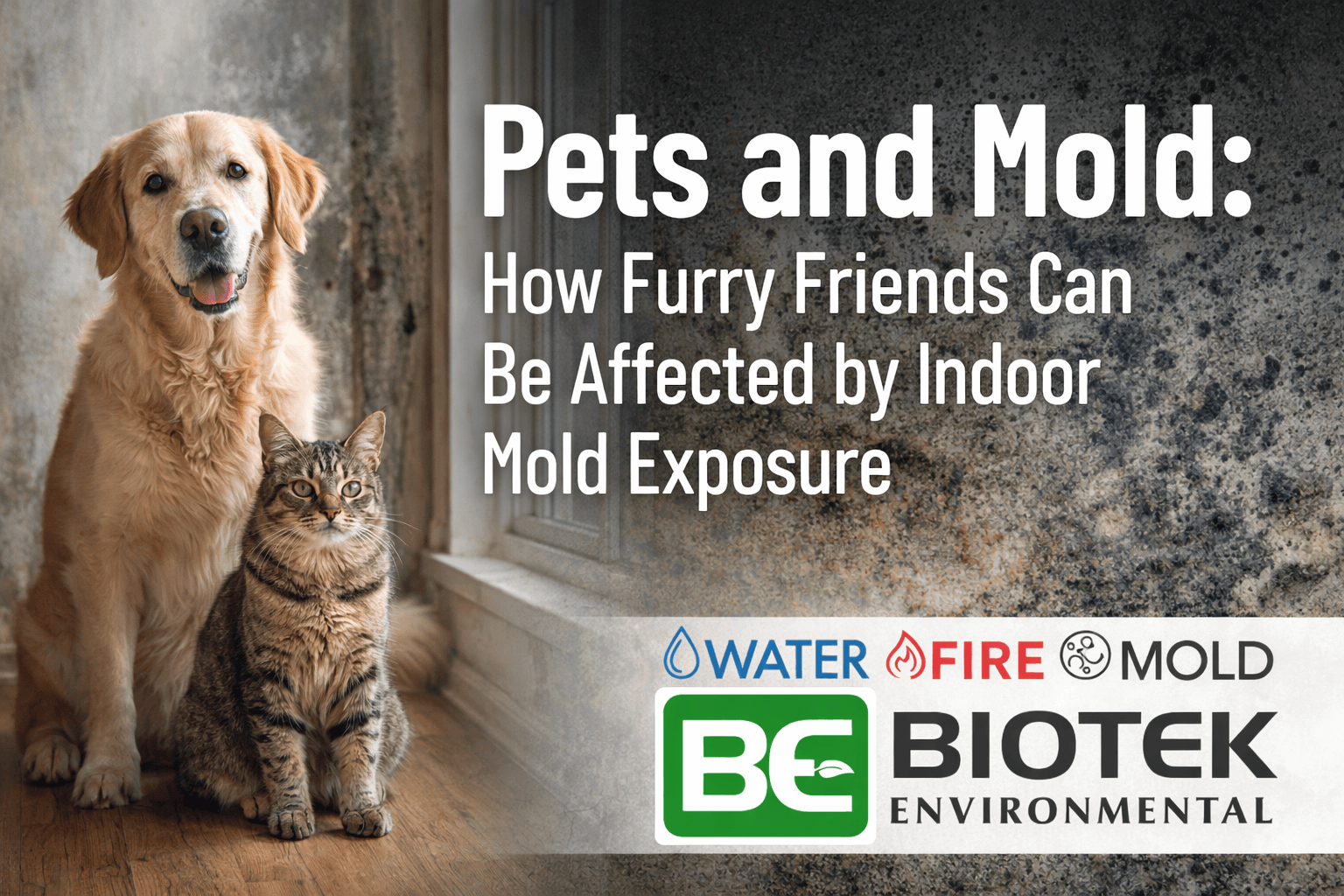
Black mold exposure can also produce similar health issues in our household pets. Animals like cats and dogs can experience skin irritation, respiratory tract illness, and open sores when exposed to mold for a prolonged period of time.
How to Deal with the Effects Exposure to Black Mold
If you suspect that your health has been affected by exposure to black mold, you should seek medical treatment as soon as possible. Nevertheless, the most effective way to deal with black mold and its effects on your health is to remove it from your living and work environments. The best way to remove it is with professional mold remediation and inspections. Do-it-yourself products will not be as effective nor will they provide you with any guarantees that the mold won’t return again soon. Professional mold remediation companies like BioTek Environmental provide guarantees for their work. In fact, at BioTek Environmental, we provide you with the best and most comprehensive warranties in the industry.
If you know or even suspect that you have mold issues in your home or workplace, you should take immediate action. If you are a resident of Columbia, Greenville, or Spartanburg, SC, call BioTek Environmental Inc at 866-630-7340 24/7 – 365 days a year or contact us online. We can provide you with professional mold inspection, removal, and remediation services. Our Clean, Green Restoration methods employ EPA registered and environmentally safe chemistries to help our customers reclaim their property from mold removal, and flood and fire damage in the safest ways possible.