Discovering mold in your rental property can transform a comfortable living situation into a stressful nightmare for both tenants and landlords. In South Carolina’s humid climate, mold growth isn’t just a possibility – it’s a persistent threat that demands attention, knowledge, and swift action. Whether you’re a tenant noticing suspicious dark spots in your bathroom or a landlord receiving complaints about musty odors, understanding your rights, responsibilities, and the proper remediation process is essential for protecting health, property value, and legal standing. The mold remediation experts at BioTek Environmental Inc. address the critical concerns both parties face when dealing with mold in rental properties throughout South Carolina.
Understanding the Mold Problem in South Carolina Rentals
South Carolina’s warm, humid environment creates ideal conditions for mold proliferation. The state’s coastal regions and inland areas alike experience high humidity levels that can persist year-round, making rental properties particularly vulnerable. Mold spores exist naturally in the air, but when they find moisture and organic materials like drywall, wood, or carpet, they quickly establish colonies that can spread throughout a property.

For tenants, mold exposure can trigger respiratory issues, allergic reactions, asthma complications, and other health concerns. Beyond health impacts, mold can damage personal belongings and create an uncomfortable living environment.
Landlords face equally serious consequences: property damage, decreased property values, potential liability for tenant health issues, and costly remediation expenses that increase dramatically when problems go unaddressed.
The financial and health stakes make it crucial for both parties to recognize warning signs early and understand their legal obligations under South Carolina law.
Common Concerns for Tenants Dealing with Mold
Tenants experiencing mold issues in their rental homes face numerous frustrations that extend beyond the visible growth itself. One primary concern involves uncertainty about reporting procedures and fear of retaliation. Many renters worry that complaining about mold might strain their relationship with their landlord or even result in lease termination or rent increases.
Communication Breakdowns and Delayed Responses
Communication breakdowns present another significant challenge. Tenants often report mold issues only to face delayed responses, dismissed concerns, or landlords who minimize the severity of the problem. This leaves renters living in potentially unhealthy conditions while waiting for action that may never come.
Financial Burdens and Uncertainty
Financial concerns also weigh heavily on tenants. Questions arise about who pays for damaged personal property, whether rent reduction is justified during remediation, and whether tenants can legally withhold rent when landlords fail to address mold problems. Additionally, tenants may struggle to determine whether mold resulted from their own actions or pre-existing property conditions, creating confusion about responsibility.
Health Concerns and Vulnerable Populations
Health anxiety compounds these issues, particularly for families with children, elderly residents, or individuals with compromised immune systems who face heightened risks from mold exposure.
Landlord Challenges and Concerns About Mold
Property owners face their own set of complicated challenges when mold appears in rental units. Determining the cause of mold growth often proves difficult – was it caused by a structural defect, inadequate ventilation, plumbing leaks, or tenant behavior like blocking vents or failing to use exhaust fans?
Liability and Insurance Complications
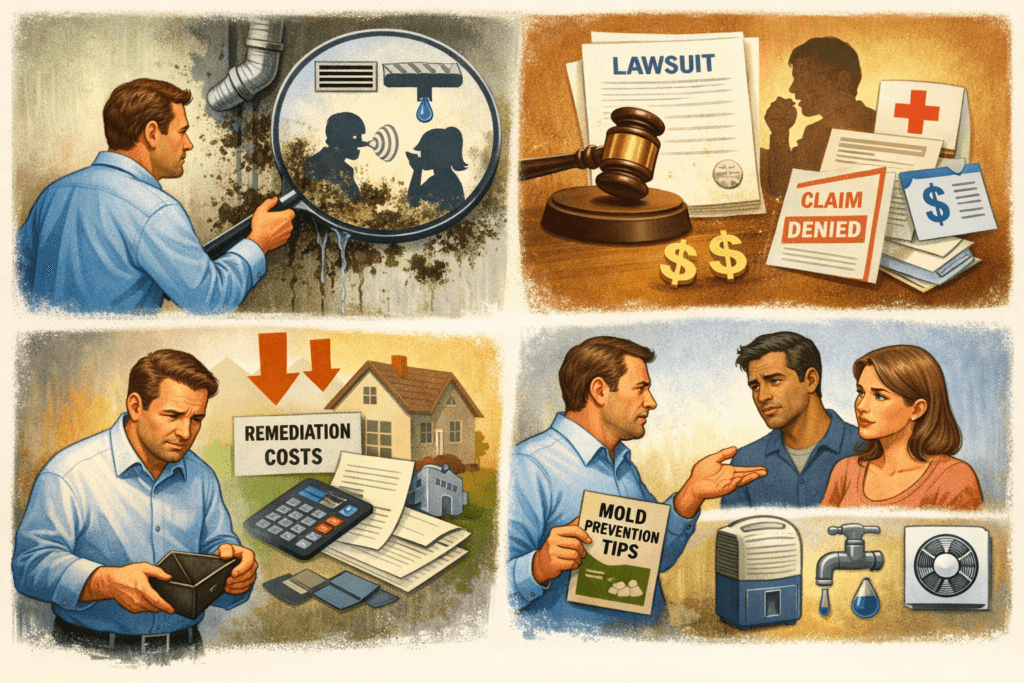
Liability concerns loom large for landlords. If tenants develop health problems they attribute to mold exposure, property owners may face legal action, medical claims, and significant financial liability. Insurance complications add another layer of difficulty, as many standard policies contain mold exclusions or coverage limitations.
Cost Management and Financial Pressures
Cost management presents ongoing difficulties. Proper mold remediation by certified professionals requires substantial investment, and landlords must balance this expense against maintaining affordable rent and positive cash flow. Preventive measures like improved ventilation systems, dehumidifiers, and moisture barriers require upfront capital that may take years to recoup.
Tenant Education and Prevention Challenges
Property owners also struggle with tenant education. Many landlords find themselves repeatedly reminding tenants about basic moisture control practices, proper ventilation use, and prompt reporting of leaks or water intrusion – preventive steps that could avoid costly remediation.
South Carolina Laws Governing Mold in Rental Properties
South Carolina addresses mold in rental properties primarily through its landlord-tenant laws and implied warranty of habitability requirements, though the state lacks specific mold-focused legislation like some other states have enacted.
Habitability Standards and Repair Timelines
Under South Carolina Code Section 27-40-440, landlords must maintain rental properties in a fit and habitable condition. Courts have interpreted this requirement to include providing properties free from conditions that pose health hazards, which encompasses significant mold problems. The law requires landlords to make necessary repairs within fourteen days after receiving written notice from tenants about conditions affecting habitability.
Landlord Obligations Under Building Codes
The South Carolina Residential Landlord and Tenant Act establishes that landlords must comply with building and housing codes affecting health and safety. When mold results from landlord failure to maintain the property—such as unrepaired roof leaks, plumbing problems, or inadequate weatherproofing—the landlord bears responsibility for remediation.
Tenant Responsibilities and Liability
However, South Carolina law also recognizes tenant responsibilities. When mold growth results from tenant actions or negligence, such as failing to clean, blocking ventilation, or not reporting water intrusion promptly, tenants may be held financially responsible for resulting damage.
Tenants have legal remedies when landlords fail to address mold issues after proper notification. These may include withholding rent until repairs are completed (following strict legal procedures), terminating the lease, making repairs themselves and deducting costs from rent, or pursuing damages through court action. However, tenants must follow specific legal procedures to exercise these rights properly.
Landlord Responsibilities for Mold Prevention and Remediation
Property owners carry significant obligations regarding mold prevention and response in their rental units. Understanding and fulfilling these duties protects both tenant health and landlord interests.
Maintaining Structural Integrity
Landlords must maintain structural integrity that prevents water intrusion. This includes keeping roofs, windows, doors, and foundations in good repair, ensuring proper drainage around the property, and maintaining functional gutters and downspouts.
Plumbing System Maintenance
Plumbing systems require regular maintenance and prompt repair. Landlords should address leaks immediately, ensure proper pipe insulation to prevent condensation, and maintain water heaters and fixtures in working condition.
Ensuring Adequate Ventilation
Adequate ventilation represents another critical landlord responsibility. Properties should have functioning exhaust fans in bathrooms and kitchens, properly maintained HVAC systems, and sufficient air circulation to prevent moisture buildup.
Responding Promptly to Mold Reports
When mold appears, landlords must respond promptly to tenant reports. This means conducting thorough inspections, determining the cause, and arranging for proper remediation by qualified professionals when mold exceeds small surface areas that tenants can safely clean themselves.
Documentation and Record Keeping
Documentation is essential for landlords. Maintaining records of property maintenance, tenant communications, inspection results, and remediation work protects landlords if disputes arise and demonstrates good-faith efforts to maintain habitable conditions.
Tenant Responsibilities in Preventing Mold Growth
While landlords bear primary responsibility for structural maintenance, tenants play a crucial role in preventing mold through proper daily property care and prompt problem reporting.
Regular Cleaning and Housekeeping
Basic cleaning and housekeeping significantly impact mold prevention. Tenants should regularly clean bathrooms and kitchens, promptly clean up spills, and address visible moisture on surfaces. Maintaining reasonable cleanliness prevents the accumulation of organic materials that feed mold growth.
Proper Ventilation Use
Proper ventilation use represents a critical tenant responsibility. Running exhaust fans during and after showers, using kitchen vents while cooking, and allowing air circulation throughout the unit reduces humidity levels that support mold development.
Prompt Reporting of Water Problems
Tenants must promptly report any water intrusion, leaks, or moisture problems to landlords. Delays in reporting allow minor issues to develop into major mold problems, potentially shifting responsibility to tenants who failed to provide timely notice.
Appropriate Furniture Placement and Property Use
Furniture placement and property use also matter. Tenants should avoid placing furniture directly against exterior walls where it restricts air circulation, should not block vents or air returns, and should use appropriate heating and cooling to maintain reasonable temperature and humidity levels.
Fulfilling Lease-Specified Responsibilities
When lease agreements specify additional tenant responsibilities, such as changing HVAC filters, cleaning bathroom exhaust fan covers, or using dehumidifiers in basement units, tenants must fulfill these obligations to avoid potential liability for resulting mold issues.
Early Warning Signs: Spotting Mold Before It Becomes Serious
Early detection significantly reduces remediation costs and health risks. Both tenants and landlords should watch for these telltale indicators that mold may be developing or already established in a rental property.
Visible Mold Growth and Discoloration
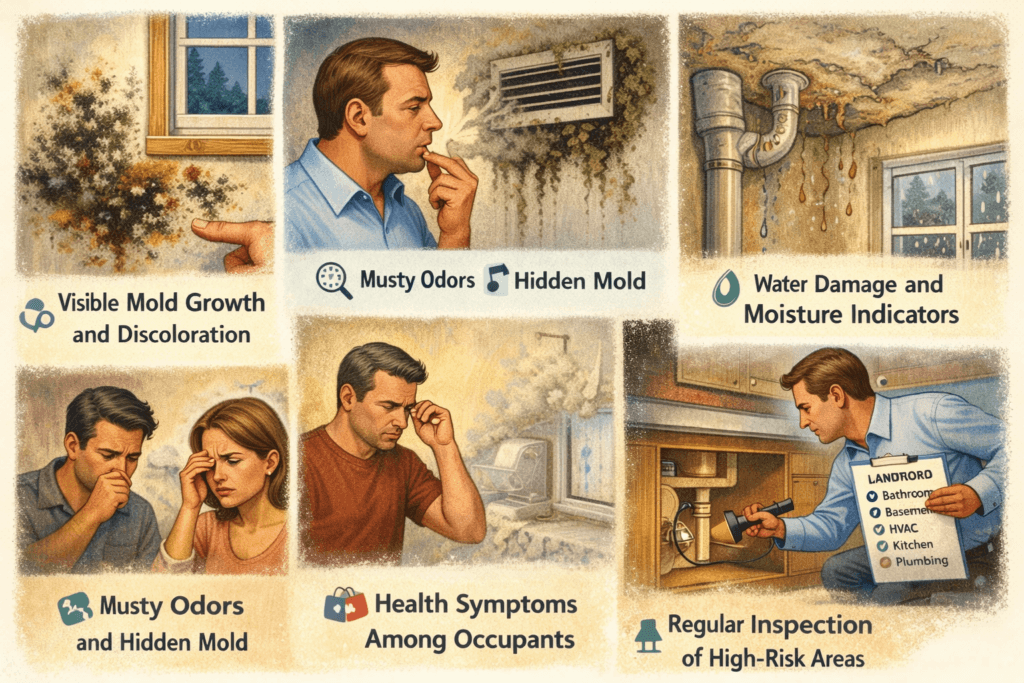
Visible growth represents the most obvious sign. You should look for discoloration on walls, ceilings, floors, or around windows and doors. Mold appears in various colors including black, green, white, or orange, and may present as spots, patches, or fuzzy growth.
Musty Odors and Hidden Mold
Musty odors often indicate hidden mold growing behind walls, under flooring, or in HVAC systems. This distinctive smell results from microbial volatile organic compounds released during mold growth and shouldn’t be ignored even when no visible mold appears.
Water Damage and Moisture Indicators
Water damage indicators like staining, warping, bubbling paint, or peeling wallpaper suggest moisture problems that create mold-friendly conditions. Condensation regularly appearing on windows, pipes, or walls indicates excessive humidity that supports mold development.
Health Symptoms Among Occupants
Health symptoms among occupants, including respiratory irritation, persistent coughing, eye irritation, or worsening allergies, may signal indoor mold problems, especially when symptoms improve after leaving the property.
Regular Inspection of High-Risk Areas
Regular inspections of high-risk areas including bathrooms, kitchens, basements, attics, around HVAC units, and near plumbing fixtures help catch problems early when remediation remains manageable.
The Professional Mold Remediation Process
Effective mold remediation requires more than surface cleaning. It demands systematic professional intervention that addresses both visible growth and underlying moisture problems while preventing future recurrence.
Comprehensive Inspection and Testing
Professional mold remediation begins with comprehensive inspection and testing. Certified specialists, like the teams at BioTek Environmental, assess the extent of contamination, identify mold types present, determine moisture sources, and develop a remediation plan tailored to the specific situation.

Containment Procedures
Containment procedures prevent mold spores from spreading during remediation. Professionals establish physical barriers, use negative air pressure systems, and seal HVAC systems to isolate work areas from unaffected portions of the property.
Removal and Cleaning Processes
Removal and cleaning processes vary based on affected materials. Non-porous surfaces undergo thorough cleaning with specialized antimicrobial solutions, while porous materials like drywall, carpet, or insulation often require complete removal and disposal when mold penetration is extensive.
Air Filtration and Spore Capture
Air filtration using HEPA equipment captures airborne mold spores released during remediation, preventing their spread and ensuring indoor air quality. This step continues throughout the remediation process and for a period afterward.
Moisture Control and Prevention Measures
Moisture control and prevention measures address the root causes that allowed mold to develop initially. This may involve repairing leaks, improving ventilation, installing vapor barriers, or recommending dehumidification equipment.
Post-Remediation Verification Testing
Post-remediation verification testing confirms successful mold removal and ensures the property meets safe air quality standards before occupants return.
Why Professional Mold Remediation Matters for Rental Properties
While minor surface mold on bathroom tiles or windowsills may be safely cleaned by occupants, widespread mold growth requires professional intervention to ensure thorough, safe, and lasting remediation.

Health and Safety Concerns
Health and safety concerns make professional expertise essential. Improper handling of mold-contaminated materials can release massive quantities of spores into the air, worsening exposure risks for occupants. Professionals use appropriate personal protective equipment and containment methods that untrained individuals typically lack.
Complete Remediation of Hidden Mold
Complete remediation addresses hidden mold that DIY efforts miss. Professionals use moisture meters, thermal imaging, and other diagnostic tools to locate mold behind walls, under flooring, and in other concealed areas where visible inspection proves insufficient.
Legal Protection and Documentation
Legal protection represents another compelling reason for professional remediation. When landlords hire certified mold remediation specialists, they demonstrate good-faith efforts to address problems properly, which provides significant legal protection if tenant disputes arise. Documentation from professional remediators carries substantial weight in court proceedings.
Property Value Preservation
Property value preservation depends on thorough remediation. Incomplete amateur remediation allows mold to return quickly, compounding damage and potentially requiring far more expensive intervention later. Professional remediation solves problems correctly the first time, preserving property integrity and value.
Insurance Considerations
Insurance considerations also favor professional remediation. Some insurance policies require professional services for mold claims, and documentation from certified remediators supports insurance claims far better than DIY efforts.
Why Choose BioTek Environmental Inc. for Mold Remediation
When mold threatens your Columbia, South Carolina rental property, choosing the right remediation company makes all the difference between effective resolution and recurring problems. BioTek Environmental Inc. brings specialized expertise, comprehensive services, and unwavering commitment to protecting both properties and occupants.

BioTek Environmental has a proven track record and long-term guarantees. We have been serving South Carolina since 2007 and was voted “Best of South Carolina 2024 and 2025” in the Restoration Contractor category.

We set ourselves apart through our “Clean, Green Restoration” philosophy. Unlike companies that use toxic poisons or heavy metals, BioTek utilizes Oxidative Mold Remediation. This process uses an EPA-registered chemistry that penetrates deeply into porous surfaces to digest fungal proteins, breaking down into harmless oxygen and water with no dangerous residues. Their commitment to safety and excellence is backed by an industry-leading 30-year warranty, providing ultimate peace of mind for both landlords and tenants.
The Importance of Certified Mold Inspections
BioTek’s technicians are CMRS (Council-Certified Microbial Remediation Supervisor) and IICRC certified, representing the highest level of expertise in the industry. For a rental dispute, their comprehensive assessments provide the scientific evidence needed to identify the moisture source and the extent of contamination. This objective data is crucial for insurance claims and legal protection, ensuring the property is restored to a safe condition according to proven industry standards.
Protecting Your Property Value for the Long Term
Water damage and mold can significantly slash a property’s market value due to structural rot and health stigmas. BioTek offers advanced solutions like biostatic coatings, which form a permanent bond to surfaces to provide residual antimicrobial protection. These coatings act like microscopic “needles” that destroy the cell membranes of mold spores upon contact, preventing future infestations for years to come. For landlords, this is an essential investment in the longevity of their rental property.
Take Action to Protect Your Home and Health!
Don’t wait for a musty smell to turn into a health crisis or a legal battle. Whether you are a landlord protecting your investment or a tenant concerned about your family’s safety, professional help is just a call away. At BioTek Environmental Inc., we offer 24/7 emergency services and the most comprehensive warranties in the state.
Call BioTek Environmental Inc. at (888) 710-1009 or contact us online today for a professional mold inspection and reclaim your property with award-winning expertise!
Frequently Asked Questions
Can a tenant break a lease due to mold in South Carolina?
Yes, under certain circumstances. If mold makes the property uninhabitable and the landlord fails to remediate after proper written notice, tenants may have grounds to terminate the lease without penalty. However, tenants should consult with an attorney before taking this step to ensure they follow proper legal procedures.
How quickly must a landlord respond to mold complaints in South Carolina?
South Carolina law requires landlords to make necessary repairs affecting habitability within fourteen days after receiving written notice from the tenant. For emergency situations involving significant mold or water intrusion, landlords should respond immediately.
Who pays for mold remediation in a rental property?
Responsibility depends on the cause. Landlords typically pay when mold results from structural issues, leaks, or property maintenance failures. Tenants may be responsible when mold develops due to their negligence, such as failing to ventilate properly or not reporting water problems promptly.
Can landlords charge tenants for mold damage?
Yes, if the damage resulted from tenant negligence or lease violations. However, landlords cannot charge tenants for mold resulting from property defects or normal wear and tear. Documentation proving the cause becomes essential in these situations.
Is mold testing required before remediation?
While not legally required, professional mold testing is highly recommended. Testing identifies mold types, determines contamination extent, and provides baseline data for verifying successful remediation. This documentation also proves valuable for insurance claims and potential legal proceedings.
What should I do if I suspect hidden mold?
Contact a professional mold inspection company immediately. Hidden mold behind walls, under floors, or in HVAC systems requires specialized detection equipment. Early professional assessment prevents minor problems from becoming major damage.
Does renters’ insurance cover mold damage to personal belongings?
Coverage varies significantly by policy. Some renters insurance policies cover mold damage to personal property if it results from covered perils like burst pipes, while others exclude mold entirely. Review your specific policy or contact your insurance agent for clarification.
How can I prevent mold from returning after remediation?
Prevention requires addressing moisture sources, maintaining proper ventilation, controlling humidity levels below 60%, promptly repairing leaks, and conducting regular inspections of vulnerable areas. Professional remediators like BioTek Environmental Inc. provide specific prevention recommendations based on your property’s unique characteristics.