Have you been feeling mentally sluggish lately, struggling to concentrate at work, forgetting things you normally wouldn’t, or waking up exhausted no matter how much sleep you get? Before blaming stress or aging, it may be worth considering something you can’t see, smell, or immediately identify: hidden mold growing somewhere inside your home or workplace.
The connection between mold and physical health symptoms like coughing, sneezing, and skin irritation is well documented. But the relationship between mold exposure and mental health, specifically brain fog, chronic fatigue, anxiety, and mood changes, is an emerging area of science that many people simply aren’t aware of. And yet, for thousands of individuals living or working in mold-contaminated environments, addressing this hidden culprit has made a life-changing difference.
This post explores how mold can silently affect the brain, what the latest research tells us, how to recognize the warning signs, and, most importantly, what you can do to protect yourself and your family.
Where Mold Hides and Why You Often Can’t Find It
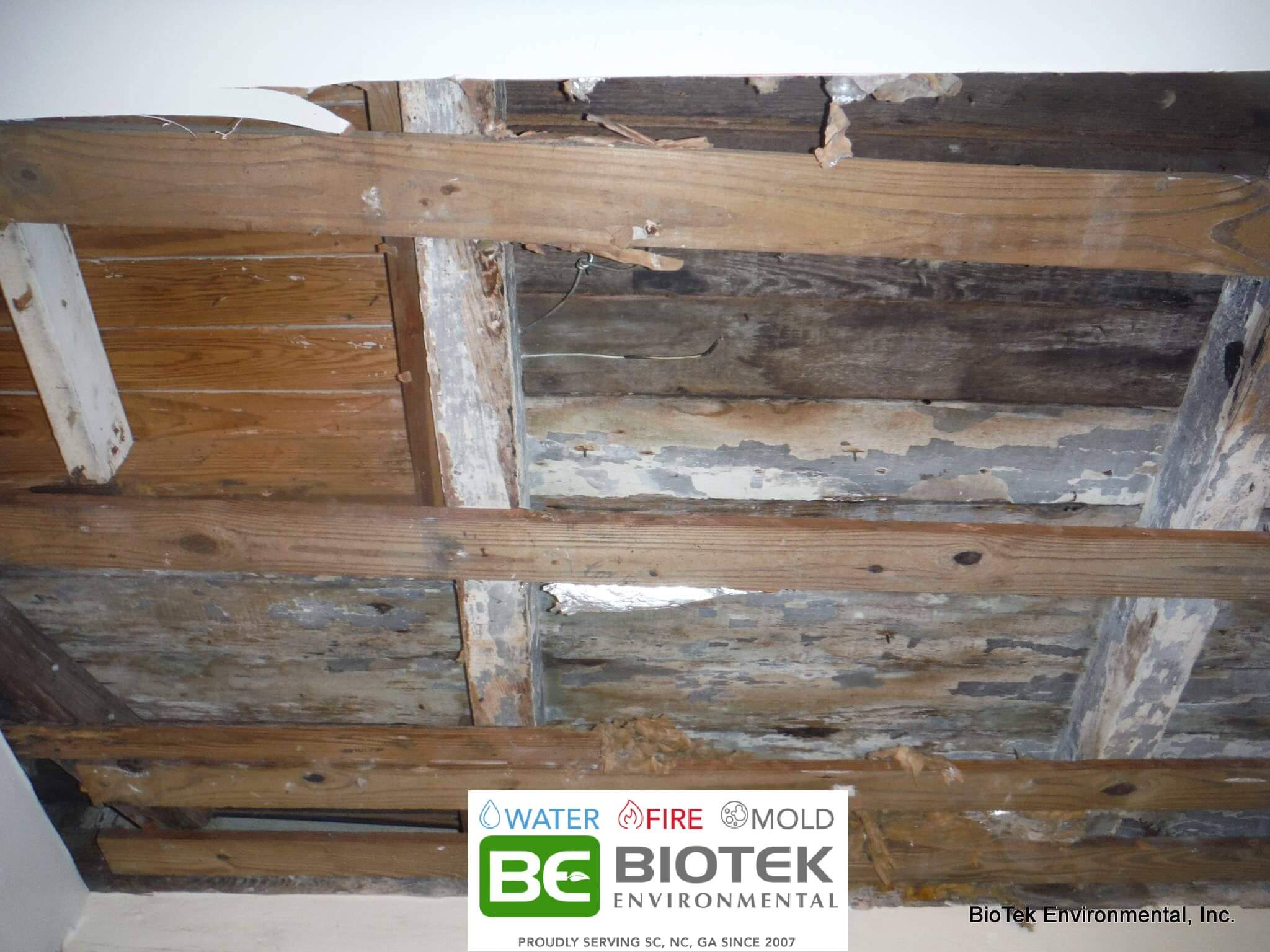
Mold doesn’t always announce itself with visible dark stains or a musty odor. While these are common giveaways, many of the most problematic mold colonies develop in places completely hidden from view: inside wall cavities, beneath flooring, inside HVAC systems, in attic spaces, and behind bathroom tiles. All mold needs to thrive is moisture, warmth, and an organic surface to feed on, conditions that quietly exist in countless homes and office buildings.
What makes hidden mold especially concerning is duration. When a mold colony develops behind a wall after a slow plumbing leak, occupants may be continuously breathing in microscopic spores for months or even years without ever identifying the source. Over time, this low-level but persistent exposure can have cumulative effects on the body and, increasingly, research suggests, on the brain.
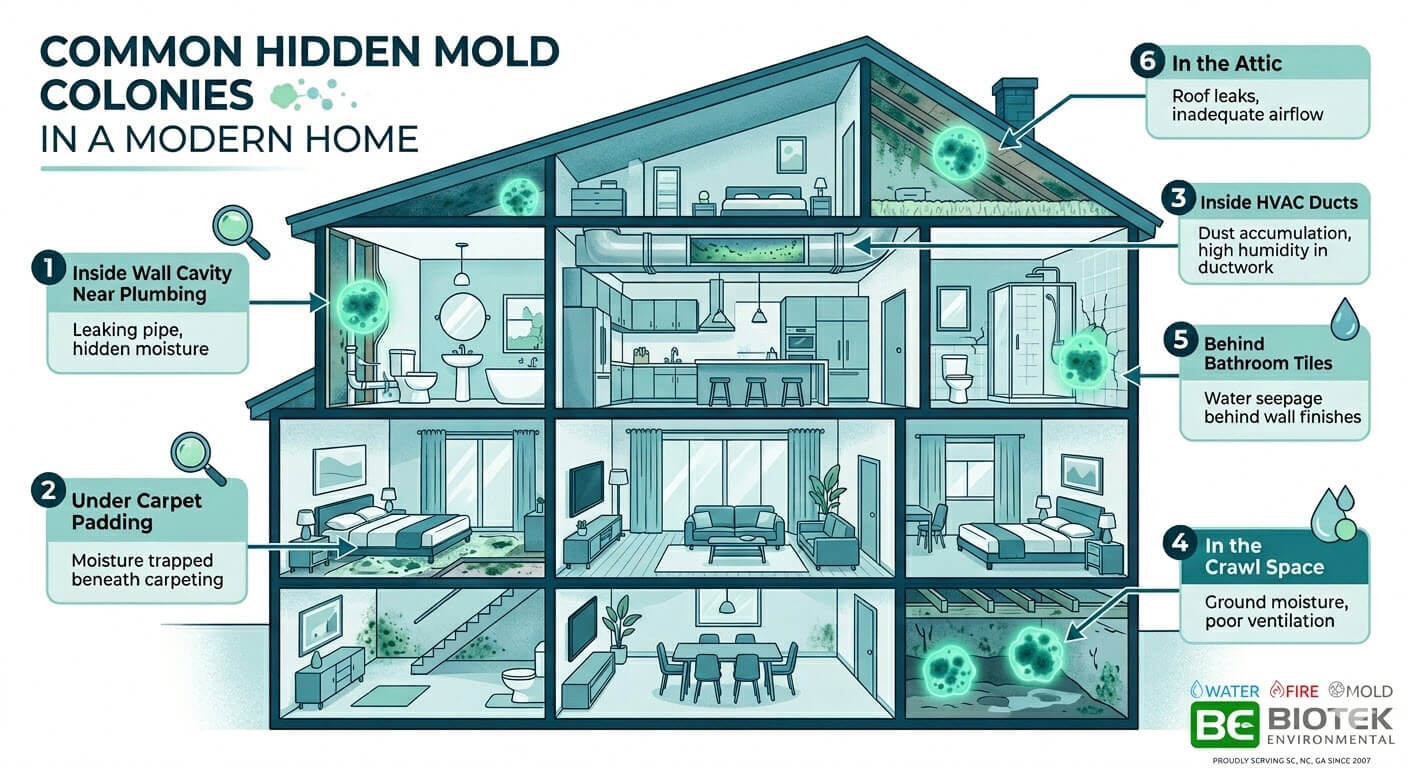
Common Hidden Mold Locations and Their Health Connections
| Hidden Location | Why Mold Thrives Here | Potential Health Impact |
| Inside wall cavities | Plumbing leaks or condensation accumulate undetected | Prolonged low-level spore inhalation, immune activation |
| HVAC ducts & air handlers | Moisture-laden air deposits spores; heat encourages growth | Spores distributed throughout entire building |
| Under carpets & flooring | Spills or slab moisture trapped beneath surface | Continuous floor-level exposure, skin & respiratory effects |
| Attic & roof spaces | Poor ventilation + roof leaks create ideal humidity | Mycotoxins can migrate into living spaces below |
| Behind bathroom tiles | Grout cracks allow moisture behind walls over time | Daily close exposure during showers or bathing |
| Crawl space & basement | Ground moisture, poor drainage, and lack of airflow | Spores rise into main living areas through stack effect |
How Mold Exposure Can Affect the Brain and Mental Health
To understand the mold-brain connection, it helps to know what you’re actually dealing with. Mold reproduces by releasing tiny spores into the air. Many species also produce chemical byproducts called mycotoxins, compounds that evolved as a kind of biological defense mechanism. When humans inhale or ingest these spores and mycotoxins, the body mounts an immune response. And here is where things get neurologically interesting.
Immune Activation and Brain Inflammation
The immune system and the brain are in constant communication. When the body detects a mold-related threat, it releases inflammatory signaling molecules called cytokines. In many people, this is a manageable short-term response. But in individuals exposed to mold on a prolonged basis, persistent immune activation can lead to neuroinflammation, inflammation within the brain itself. This state of low-grade brain inflammation is increasingly recognized as a contributor to mood disorders, cognitive slowing, and physical fatigue.
Mycotoxins and Neurotransmitter Disruption
Some mycotoxins are capable of crossing the blood-brain barrier, the protective gateway that normally shields the brain from harmful substances. Once inside, they can create oxidative stress (cellular damage from unstable molecules called free radicals) and interfere with the normal signaling between nerve cells. Neurotransmitters like serotonin, dopamine, and acetylcholine, all critical for mood regulation, motivation, and memory, can be disrupted. The result? Symptoms that feel like depression, anxiety, or cognitive impairment, even when standard psychological screenings come back unremarkable.
Genetic Susceptibility: Not Everyone Is Equally Affected
An important nuance: not everyone exposed to mold develops significant neurological or psychiatric symptoms. Research indicates that roughly 25% of people carry a genetic variation affecting how efficiently their immune system processes biotoxins like mycotoxins. For these individuals, the body is less able to clear these compounds, leading to a cycle of ongoing immune activation and symptom escalation. This partly explains why two people living in the same mold-affected home can have dramatically different experiences.
What Emerging Research Tells Us
The science connecting mold exposure to brain and mental health symptoms has matured considerably in recent years. Here are three key findings that paint a clearer picture:
1. Mold Particles Directly Trigger Brain Inflammation
Animal model research published in 2019 demonstrated that inhaling mold particles, even from species that don’t produce toxins, is sufficient to activate the brain’s innate immune system. This immune activation was associated with measurable impairments in memory, learning capacity, and emotional regulation. Critically, the research found this effect was not limited to toxic mold varieties; non-toxic molds triggered similar inflammatory pathways, suggesting the physical presence of spores, independent of mycotoxin content, is enough to affect neurological function.
2. Mycotoxins, Oxidative Stress, and Persistent Symptoms
Scientific reviews examined the mechanisms by which mycotoxins affect the central nervous system. The review concluded that these compounds can penetrate the blood-brain barrier and generate oxidative stress, directly interfering with nerve cell communication. The authors linked this process to a cluster of symptoms that will sound familiar to many mold-exposed individuals: persistent tiredness that doesn’t resolve with rest, difficulty concentrating or maintaining focus, and shifts in mood or emotional stability.
3. Damp Homes and Rates of Depression
Large observational studies examining housing conditions and mental health have found a striking pattern: people living in damp or visibly moldy homes report rates of depressive symptoms approximately 30 to 40 percent higher than those in clean, dry environments. While these studies demonstrate association rather than direct causation, the consistency of this finding across multiple populations and geographic regions has led researchers to call for greater attention to indoor air quality as a public health concern.
4. Improvement After Remediation
Perhaps the most compelling evidence comes from clinical observations of individuals who sought professional remediation after experiencing unexplained cognitive and fatigue symptoms. Clinicians have noted that many exposed individuals demonstrate cognitive challenges resembling those seen in mild brain injury, and that these challenges frequently improve, sometimes substantially, once the mold source is professionally identified and removed. This pattern of symptom improvement following remediation provides some of the strongest real-world support for the mold-brain connection.

Recognizing the Warning Signs in Yourself and Your Property
Because mold-related neurological symptoms overlap with so many common conditions, they are frequently misattributed or go undiagnosed for extended periods. If you or someone in your household has been experiencing a cluster of the following symptoms, particularly with no clear medical explanation, mold exposure may warrant serious consideration:
Cognitive and Mental Health Symptoms:
- Persistent difficulty concentrating or staying on task (“brain fog”)
- Memory lapses — forgetting words, names, or recent events more than usual
- Mental fatigue: feeling mentally drained even after light cognitive activity
- Heightened anxiety or a sense of unease with no identifiable trigger
- Low mood, emotional flatness, or unexplained irritability
- Disrupted sleep patterns despite feeling exhausted
Physical Symptoms That Often Co-occur:
- Chronic fatigue that doesn’t respond to rest or lifestyle changes
- Recurring headaches, especially upon waking or spending time indoors
- Persistent sinus congestion, post-nasal drip, or respiratory irritation
- Sensitivity to light or sounds
- Joint or muscle aches without a clear physical cause
Property Red Flags to Watch For:
- A musty, earthy, or sour smell, especially in basements, bathrooms, or near HVAC vents
- Visible discoloration on walls, ceilings, or around window frames
- History of flooding, roof leaks, or persistent plumbing issues
- Condensation regularly forming on windows or cold surfaces
- Symptoms that improve noticeably when you spend time away from home or work
That last point, symptom improvement when away from the building, is one of the most revealing clues. If your brain fog lifts during a vacation or weekend away, only to return when you’re back at home, the environment itself may be the problem rather than any internal medical issue.
Symptom Comparison: Mold-Related vs. Common Misdiagnoses
| Symptom Category | Common Mold-Related Manifestation | Often Mistaken For |
| Cognitive | Memory lapses, difficulty concentrating, mental fatigue | Burnout, depression, ADHD |
| Physical Fatigue | Persistent tiredness unrelieved by sleep | Chronic fatigue syndrome, thyroid issues |
| Mood & Emotional | Anxiety, irritability, low mood | Generalized anxiety disorder, stress |
| Neurological | Headaches, dizziness, sensitivity to light | Migraines, vertigo, vision problems |
| Respiratory (co-occurring) | Chronic cough, sinus congestion, shortness of breath | Seasonal allergies, asthma, sinusitis |
Why Professional Mold Remediation Matters for Your Health
It’s a completely understandable impulse: when you suspect mold, you want to tackle it yourself immediately. A quick scrub with bleach or a store-bought mold spray feels proactive and affordable. The problem is that surface cleaning almost never addresses hidden mold colonies, and in many cases, it can actually make things worse by disturbing and dispersing spores into the air.
Effective mold remediation is a multi-step, science-based process. It requires accurately locating all mold growth (including behind walls and under floors), identifying and eliminating the moisture source that enabled growth, safely removing contaminated materials using proper containment and protective equipment, treating the affected area with appropriate antimicrobial solutions, and verifying success with post-remediation air quality testing.
Without each of these steps, mold typically returns, often within weeks.
DIY Cleaning vs. Professional Remediation — A Practical Comparison:
| Factor | DIY Cleaning | Professional Remediation (BioTek) |
| Hidden mold detection | Misses mold behind walls, under floors | Advanced testing & thermal imaging |
| Root cause addressed? | Rarely, surface only | Yes, moisture source identified & resolved |
| Safety during removal | Risk of spore dispersal without proper PPE | Containment protocols, non-toxic treatments |
| Long-term results | Mold often returns within weeks or months | 30-year industry warranty on completed work |
| Peace of mind | Uncertain, no verification testing | Post-remediation air quality testing confirms success |
How BioTek Environmental Inc. Can Help
If you’re concerned about mold in your home or commercial property, BioTek Environmental Inc. offers the kind of thorough, professional response that hidden mold situations demand. Founded in 2007 and based in Columbia, South Carolina, BioTek has spent nearly two decades earning the trust of homeowners and businesses across South Carolina, North Carolina, and Georgia.
What sets BioTek apart:
- Comprehensive mold inspection and testing: BioTek uses advanced technology to detect mold in the places it hides, inside walls, under floors, in duct systems, not just what’s visible on the surface.
- Non-toxic, environmentally safe methods: Our remediation approach prioritizes the health of your household and the environment, using treatments that are effective without introducing new chemical hazards.
- 30-year industry warranty: At BioTek, we stand behind the permanence of our work with one of the most comprehensive warranties in the industry.
- 24/7 emergency response: Mold problems don’t wait for business hours. BioTek is available around the clock for urgent situations.
- Locally owned and operated: As a locally owned business, BioTek is deeply invested in the health of the communities we serve.
When your health, your family’s wellbeing, and the value of your property are at stake, experience and thoroughness matter. BioTek Environmental Inc. provides both.

Protect Your Health — Schedule Your Professional Mold Inspection Today
Don’t let hidden mold silently undermine your health and quality of life. If you’ve been experiencing unexplained fatigue, brain fog, mood changes, or other symptoms that don’t seem to have a clear cause, a professional mold inspection could provide the answers and the path to feeling like yourself again.
BioTek Environmental Inc. is ready to help. Contact our team today:
- Call us toll-free: 1 (888) 710-1009 (available 24/7)
- Request an inspection online: https://biotekhelp.com/contact-us/
Serving South Carolina, North Carolina, and Georgia, with the expertise, technology, and industry-leading warranty to back every job we complete.
Frequently Asked Questions
1. Can mold really cause brain fog and mental health symptoms?
Yes, and this is supported by a growing body of scientific research. Mold spores and mycotoxins can activate the immune system in ways that promote neuroinflammation, disrupt neurotransmitter function, and create oxidative stress in the brain. These biological processes are associated with symptoms including difficulty concentrating, memory problems, fatigue, anxiety, and mood shifts. Individual responses vary significantly based on genetics and duration of exposure.
2. How do I know if mold is causing my symptoms and not something else?
One of the clearest indicators is whether your symptoms improve when you spend time away from the suspected building and worsen upon return. Symptoms that follow this location-dependent pattern, better on vacation, worse at home or work, are a significant clue. A professional mold inspection combined with consultation with a healthcare provider familiar with biotoxin-related illness can help identify whether mold is a contributing factor.
3. Is all mold dangerous to mental health, or only toxic black mold?
Research published in 2019 found that even non-toxin-producing mold species can trigger immune responses in the brain that impair memory and emotional regulation. While certain varieties like Stachybotrys chartarum (often called “black mold”) produce particularly potent mycotoxins, the evidence suggests that mold exposure more broadly, not just toxic varieties, can have neurological effects. Any significant mold presence warrants professional attention.
4. Can I just clean the mold myself with bleach?
Surface cleaning with bleach or household mold sprays rarely addresses the root problem. These products can eliminate surface mold on non-porous materials but are ineffective against mold growing deep within porous surfaces like drywall, wood, or insulation. Without identifying and eliminating the moisture source, mold almost always returns. For any significant or hidden mold growth, professional remediation is the most reliable and safest approach.
5. How long does it take to feel better after mold remediation?
Recovery timelines vary considerably based on individual health, the duration and intensity of exposure, and whether any lasting immune or neurological changes occurred. Some individuals notice improvement in cognitive symptoms within days to weeks of removing themselves from the mold environment. Others, particularly those who were exposed for a long time or who have genetic susceptibility to biotoxin illness, may benefit from working with a physician alongside the remediation process. Clinical observations suggest improvement is common once the source is thoroughly removed.
6. What does a professional mold inspection involve?
Professional mold inspections combine visual assessments with advanced technology like thermal imaging and moisture meters to detect hidden leaks and moisture without demolition. Certified experts collect air and surface samples for analysis by accredited laboratories to identify specific mold species and concentrations. They also investigate concealed areas, including HVAC systems and ductwork, which are frequently missed. The process concludes with a comprehensive report providing scientific data and actionable remediation recommendations.
7. My house smells fine, can I still have hidden mold?
Absolutely. While a musty or earthy odor is a common sign of mold, many hidden mold colonies, particularly those inside wall cavities or ductwork, produce little to no detectable odor at normal levels. Absence of smell does not mean absence of mold. If you have a history of leaks, plumbing issues, or high indoor humidity, or if you’re experiencing unexplained symptoms, a professional inspection is the only reliable way to assess what may be happening in concealed spaces.
8. Does BioTek serve my area, and how quickly can they respond?
BioTek Environmental Inc. serves homeowners and businesses across South Carolina, North Carolina, and Georgia. They offer 24/7 emergency response for urgent situations, so you don’t have to wait for answers. To schedule an inspection or speak with their team, call toll-free at 1 (888) 710-1009 or submit an inquiry through our online form.
Ready to Breathe Easier? Contact BioTek Environmental Inc. Today.
Your mental clarity, energy, and peace of mind are worth protecting. BioTek Environmental Inc. has been helping families and businesses across the Southeast achieve safer, healthier indoor environments since 2007 with the expertise, technology, and commitment to quality that every mold situation deserves.
📞 Call Toll-Free 1 (888) 710-1009 | 🌐 Contact Us Online